
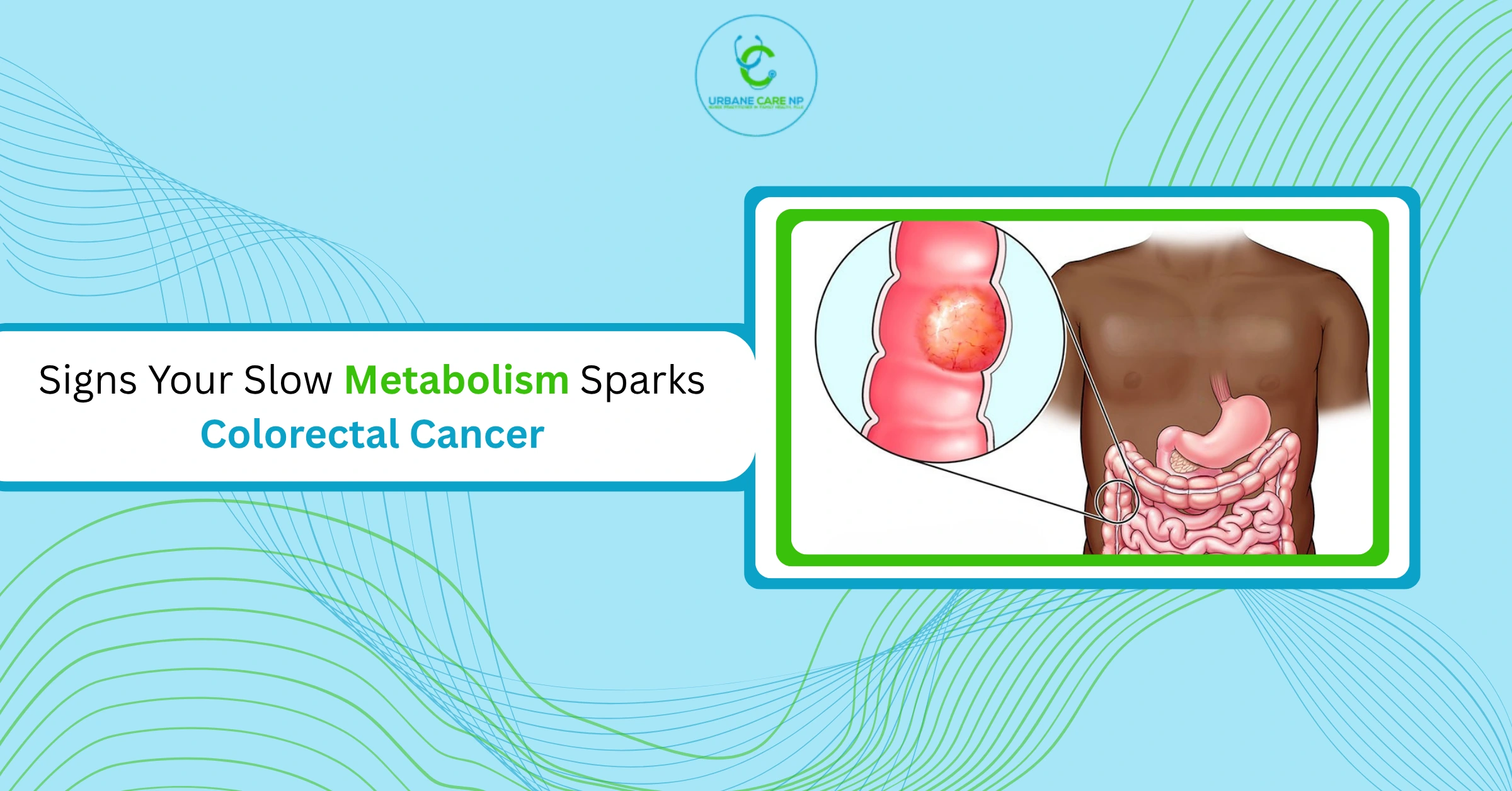
Slow metabolism can make you feel tired, heavy and not like yourself. It can also go with health changes that should not be ignored. While slow metabolism does not mean a person has colorectal cancer, some body signs may point to a problem that needs medical care.
At Urbane Health Care, we care about the whole person. We know that health is not just about one symptom. It is about the body, the mind and daily life. Our team supports cancer survivorship and recovery, primary and functional care, veteran evaluations and metabolic and hormone optimization. We help patients learn what their body may be saying and what steps to take next.
What Is Slow Metabolism?
Metabolism is the process by which your body transforms food into energy. When it is slow, your body may burn energy more slowly than usual. This can lead to low energy and other changes. When identifying low metabolism symptoms, it is important to look at how they impact your daily rhythm.
A slow metabolism may happen with:
- Tiredness
- Weight gain
- Constipation
- Feeling cold often
- Low appetite or food changes
- Weakness
Some of these signs can also happen with many other health problems. This is why considering the whole situation is crucial.
Signs That Should Not Be Ignored
A slow metabolism can hide other problems. If it happens along with signs that affect your stomach or bowel habits, it may be time to get checked.
Watch for these warning signs:
- Blood in the stool
- A change in bowel habits
- Ongoing constipation or diarrhea
- Severe stomach pain with sweating and diarrhea
- Belly pain that does not go away
- Feeling full too fast
- Weight loss without trying
- Weakness or low energy that keeps getting worse
These signs do not always mean colorectal cancer. But they should never be brushed off.
How Slow Metabolism Can Connect to Colorectal Cancer
Slow metabolism itself does not cause colorectal cancer. Still, some signs of slow metabolism may overlap with symptoms that happen when something is wrong in the colon or rectum. Many patients ask, “Can constipation cause cancer?” Constipation may result from metabolism or obstruction.
For example:
- Constipation may be a sign of a bowel problem
- Tiredness may happen if the body is losing blood
- Weight loss may happen when the body is not working well
- Belly pain may come from changes in the colon
When these signs last for a long time, a doctor should take a closer look.
Body Signs to Watch Closely
Here are some body changes that may mean you need medical help soon:
- You poop less often than normal
- Your stool looks thin or different
- You see red blood or dark stool
- Your stomach feels bloated often
- You feel weak for no clear reason
- You have pain when using the bathroom
- Your appetite is lower than normal
If more than one of these signs is happening, do not wait too long to get care.
Who May Be at Higher Risk
Some people have a higher chance of colorectal cancer. The risk can go up with age, certain life habits, and a knowledge of hereditary bowel cancer symptoms within the family tree.
Risk can be higher if a person:
- Is older
- Has a family history of colorectal cancer
- Eats a lot of processed food
- Does not move much
- Smokes
- Drinks too much alcohol
- Has long term bowel problems
A slow metabolism may also happen when a person is not active or has poor eating habits. That is one reason healthy lifestyle care matters so much.
What You Can Do Next
If you notice warning signs, do not guess. Get checked by a healthcare professional. Early care can make a big difference.
Here are some simple steps:
- Write down your symptoms
- Note when they started
- Share any blood in stool right away
- Tell the doctor about weight loss
- Ask about colon cancer screening
- Check back in if symptoms persist.
Even small signs can matter when they keep happening.
How Urbane Health Care Helps
At Urbane Health Care, we focus on personalized care. We believe patients deserve time, education and support. Dr. Omotara J. Adewale started Urbane Health Care to make healthcare more accessible. Her care model brings medicine and empathy together with a strong focus on metabolic health and lifestyle change.
We address complex connections, such as the link between cancer and high cholesterol, as both can be indicators of metabolic dysfunction. We also provide clarity on metabolic questions like, “Does high cholesterol affect your liver?” to check that your entire system is running properly.
We help with:
- Cancer survivorship and recovery
- Primary and functional care
- Veteran evaluations
- Metabolic and hormone optimization
This means we do not just look at one symptom. We look at the whole person. That is important when a person feels tired, constipated, or unsure about changes in the body.
Healthy Habits That Support Your Body
Good daily habits can help your body feel better and may lower health risks over time.
Try to:
- Eat more fiber
- Drink enough water
- Move your body each day
- Sleep well
- Limit processed foods
- Get regular checkups
- Talk to a doctor about new symptoms
These small steps can support better digestion and better energy.
When To Seek Care Right Away
Some signs need faster attention. Get help soon if you have:
- Blood in your stool
- Black stool
- Severe belly pain
- Fast weight loss
- Ongoing weakness
- New bowel changes that do not stop
These signs need to be examined at the earliest opportunity.
Final Thoughts
Slow metabolism may seem like an extra burden in life, but it may also be an indicator that there is something more occurring. If you have bowel movements, a bellyache, blood in your stool, or weight loss, don’t ignore it. Pay attention to these signs. These symptoms can indicate colorectal cancer or some other health issues.
Urbane Health Care has come to help you receive personal, kind, yet holistic health care. We work with families and veterans, and we do believe that education empowers people to take charge of their well-being. The better choices you can make, the earlier you should seek help when you know your body.
FAQs
Q. What is the biggest warning sign?
Blood in the stool and lasting bowel changes should be checked.
Q. Can a doctor help with metabolism and cancer checks?
Yes. A doctor can look at your symptoms and guide you to the right tests.


